
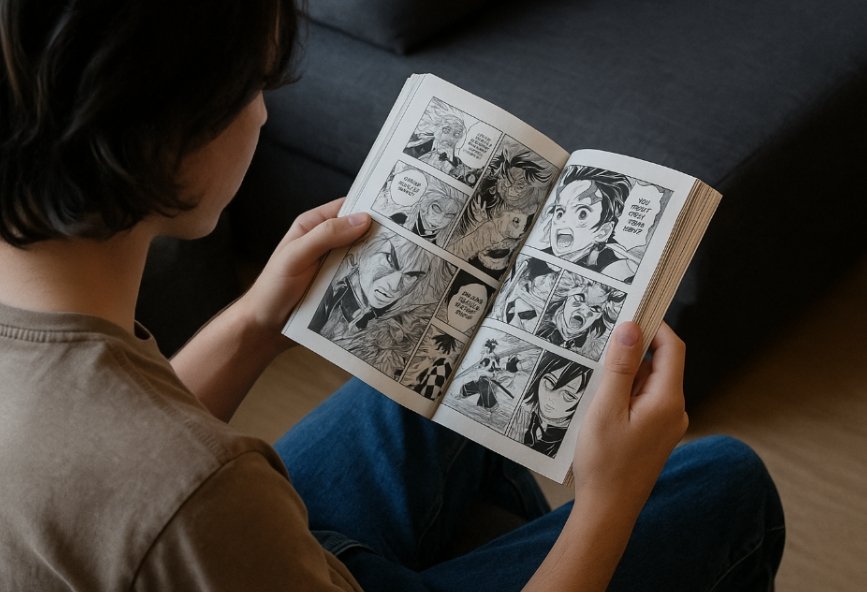
If you’re standing at the crossroads of curiosity and concern, asking whether Demon Slayer is age-appropriate for you or your child, you’re not alone. This visually gripping, emotionally loaded manga by Koyoharu Gotouge has captivated millions but its beautiful pages also harbour demons, bloodshed and trauma that not every reader may be ready to handle. Reading manga isn’t just flipping through comic panels. It’s stepping into a world often dark, often intense that grips the imagination like a vice. Demon Slayer is no exception. But how young is too young to step into Tanjiro’s heartbreaking journey? Let’s break through the mist, explore official age ratings, narrative themes, and help you decide when or whether this manga should land on your bookshelf.
What is the official age rating for the Demon Slayer manga?
The official age rating for the Demon Slayer manga in the UK is generally 15+, according to various publishers and retailers. This rating reflects the graphic content, emotional intensity, and violence present throughout the series. The manga doesn’t hold back. Blood flows freely, characters suffer tragic losses, and the world is unforgiving. The violence isn’t stylised for humour it’s often brutal, visceral, and emotionally jarring. For example, one of the first chapters shows the main character returning home to find his family slaughtered. This sets the tone for much of the series.
While the anime adaptation does soften some scenes, the manga presents raw imagery, close-up panels of attacks, dismemberments, and explicit emotional trauma. As such, it’s not suitable for very young readers.
That said, it’s important to differentiate between physical age and emotional maturity. A 14-year-old with an understanding of storytelling structure and emotional nuance may process the content better than a 17-year-old unaccustomed to dark fiction. The question becomes less about “can they read it?” and more about “should they?” For those interested in merchandise that aligns with the manga’s spirit, you can explore these high-quality Demon Slayer figures to celebrate the series safely and visually.
Is the manga too intense for younger readers?
This is where things get a bit murkier. While Demon Slayer is certainly thrilling and emotionally gripping, it carries themes that can be mentally taxing for younger audiences. Parents and guardians should note that many story arcs involve psychological trauma, moral dilemmas, and unfiltered pain. It isn’t a simple good vs. evil narrative. Demons have backstories that may trigger emotions such as empathy or guilt not an easy thing for younger minds to navigate. Some panels feature unflinching portrayals of fear and desperation, often drawn with detail that’s purposefully discomforting. There’s no sexual content or profanity in abundance, but the emotional maturity required is significant.
Even the themes of family loss, sacrifice, and revenge are handled in a way that could leave lasting emotional impressions. That said, some teens appreciate this depth and consider it a powerful form of storytelling. If you’re looking for a safer introduction to the manga universe, other titles like My Hero Academia or Pokémon Adventures might offer action without the same emotional intensity. For fans seeking alternative ways to engage with the franchise, the wider selection of anime figures is an engaging, age-neutral option.
What makes Demon Slayer appealing to young readers?
Despite its dark tones, Demon Slayer exerts a gravitational pull on teenagers and young adults and not just because of its action sequences. The manga builds complex characters, moral ambiguity, and stunning visuals that rival any top-tier graphic novel. Readers are drawn to Tanjiro’s unwavering empathy, Nezuko’s struggle with identity, and the brother-sister bond at the heart of the story.
Character development that resonates
Each character in Demon Slayer undergoes personal growth, much of it built through suffering and perseverance. This makes them relatable to teens navigating their own internal conflicts and challenges.
Symbolism and story arcs
The manga utilises metaphor-heavy imagery the constant fight against demons as a symbol of internal battles, and the Hashira (elite demon slayers) as beacons of different emotional strengths. Such depth provides material for reflection, ideal for older teens with a growing interest in narrative layers.
Common themes that may influence age suitability
Not all young readers are affected the same way by dark fiction. Some find it therapeutic, others overwhelming. Let’s explore key themes that might influence the age you’d consider appropriate:
- graphic violence
- death and grief
- moral ambiguity
- trauma recovery
- revenge vs justice
- empathy in battle
- dark humour
- symbolic fear
These aren’t surface-level motifs. They’re woven deeply into the storytelling fabric and are almost impossible to ignore. For sensitive readers, the themes might be too much. For others, they might be transformative.
Can Demon Slayer be read as a family?
This may surprise you but yes, Demon Slayer can be enjoyed as a family, with conditions. Reading together allows for real-time discussion, explanation and emotional support. Parents who understand the content can guide their children through difficult scenes or even decide when to skip certain arcs.
Benefits of family reading
Reading as a group opens dialogue about emotions, morality, and resilience. It becomes less about monsters and more about bonding over character choices and outcomes.
Setting boundaries
If your child is younger than the recommended age, preview the content beforehand. Start slowly. Discuss what you read. Pause when necessary. In many cases, this shared experience deepens understanding and builds trust.
Our final thoughts on Demon Slayer and age suitability
Demon Slayer isn’t just a tale about battling evil it’s a story about loss, redemption and the fragile line between humanity and monstrosity. It’s gorgeous, harrowing, and richly written. But it’s also intense. Whether you’re a parent or a curious young reader, use age ratings as a guide, not a rule. Assess emotional readiness, not just numbers on a birthday cake. If approached thoughtfully, Demon Slayer can become more than a manga. It can be an unforgettable, even life-shaping journey.
