
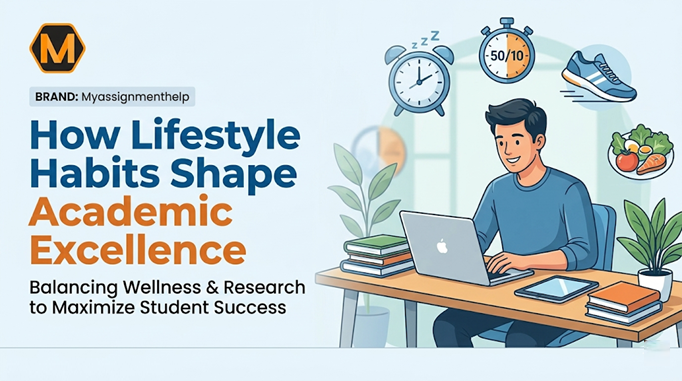
The transition into university life is often viewed through the narrow lens of academic rigor—endless lectures, complex lab reports, and the constant pressure of maintaining a high GPA. However, modern educational psychology suggests that academic success isn’t just born in the library; it is cultivated in the kitchen, the gym, and the sleep cycle. For undergraduate students globally, the challenge lies in balancing these lifestyle factors with a mounting workload. When the pressure peaks, many find that utilizing a professional essay writing service is a strategic way to maintain this balance, allowing them to focus on their physical and mental well-being without sacrificing their grades.
The connection between physical health and cognitive function is backed by neurobiology. When you prioritize a nutrient-dense diet and consistent exercise, you aren’t just “staying fit”; you are optimizing your brain’s ability to process and retain information. A sedentary lifestyle, often fueled by late-night energy drinks and processed snacks, creates a “brain fog” that makes even the simplest assignment feel like a mountain. By treating your body like a high-performance machine, you ensure that when you sit down to study, your focus is sharp and your memory is receptive.
The Foundation of Cognitive Performance
To understand how lifestyle dictates grades, we must look at the “pillars” of student health. These are not just suggestions; they are the biological requirements for high-level thinking.
| Lifestyle Pillar | Impact on Academics | Recommended Strategy |
| Circadian Rhythm | Memory consolidation and alertness. | 7-9 hours of consistent sleep. |
| Nutritional Density | Sustained energy and focus. | Low-glycemic meals; hydration. |
| Active Recovery | Stress reduction and neuroplasticity. | 30 mins of movement daily. |
| Digital Hygiene | Reduced cognitive load and anxiety. | “No-screen” zones 1 hour before bed. |
Breaking the Cycle of Academic Stress
One of the greatest hurdles for any student is the “Topic Block.” You have the energy and the focus, but you lack the direction. This is especially true in the humanities and social sciences where the scope of work is vast. For instance, when tasked with a sociological analysis, students often spend days paralyzed by choice. Exploring a pre-curated list of family essay topics can spark the necessary inspiration to get the gears turning. These specific themes help narrow down a broad interest into a manageable research question. In fact, many students consult Myassignmenthelp to gain these unique insights and expert perspectives, ensuring their research starts on a solid foundation of expertise rather than guesswork.
This collaboration between personal effort and expert resources is what defines a successful modern student. It isn’t about doing everything alone; it’s about knowing when to use tools to maximize your efficiency. When you have a clear roadmap for your essay, the actual writing process becomes a series of logical steps rather than a source of chronic stress.
The Role of Sleep in Memory Consolidation
We have all heard the “all-nighter” stories, but the reality is that sleep deprivation is a cognitive poison. During REM sleep, your brain is busy filing away the day’s information. If you cut this process short, you are essentially deleting the work you did in the library. A student who sleeps six hours after studying for four will almost always outperform a student who stays awake for ten hours straight.
Furthermore, sleep regulates cortisol—the stress hormone. High cortisol levels make it difficult to think creatively or solve complex problems. By maintaining a strict sleep schedule, you are giving your brain the “maintenance time” it needs to perform at a high level the following day.
Creating a Productive Environment
Your physical surroundings act as a silent tutor. A cluttered, loud, or poorly lit room forces your brain to spend extra energy filtering out distractions.
- The Power of Natural Light: Studying near a window can regulate your mood and keep your energy levels stable.
- The 50/10 Rule: Study for 50 minutes, then leave your desk for 10. This prevents the “law of diminishing returns” where you are looking at words but no longer reading them.
- Ergonomics: A supportive chair and a desk at the correct height prevent the physical strain that leads to early fatigue.
Information Gain: The New Standard for Success
In 2026, simply repeating what is in a textbook isn’t enough to rank well in class or in the professional world. Professors and search engines alike look for “Information Gain”—the ability to provide a new perspective or a unique synthesis of data. This is where your lifestyle plays a final, crucial role. A student who explores the world, engages in different hobbies, and maintains a social life has a broader “knowledge pool” to draw from. This allows you to bring unique analogies and real-world examples into your writing, which is the hallmark of an A-grade paper.
Conclusion: The Balanced Path
Academic excellence is a marathon, not a sprint. If you neglect your lifestyle, you will eventually hit a wall, regardless of your intelligence. By integrating healthy habits, seeking help when the workload becomes unmanageable, and using structured resources to guide your research, you create a sustainable path to success. Remember, the goal isn’t just to graduate; it’s to enter the professional world with a healthy mind and a sharp, capable intellect.
FAQ: Academic Success and Lifestyle
Q. 1. How do I balance healthy eating with a student budget?
Ans: Focus on “staple” proteins and complex carbs like lentils, oats, and eggs. These are affordable and provide longer-lasting energy than sugary snacks or fast food.
Q. 2. Is it better to study early in the morning or late at night?
Ans: This depends on your personal chronotype, but generally, early morning study sessions are more productive because the brain has just finished its “reset” cycle during sleep.
Q. 3. How can I improve my writing speed?
Ans: Speed comes from preparation. Use structured outlines and brainstorming lists before you start writing the first draft. This prevents you from getting stuck mid-paragraph.
Q. 4. Can external help actually improve my learning?
Ans: Yes. Seeing how a professional structures an argument or cites sources can provide a “blueprint” that improves your own writing skills for future assignments.
About The Author
I am an academic strategist and senior consultant at Myassignmenthelp, where I specialize in helping undergraduate students navigate the complexities of higher education. With over a decade of experience in content strategy and educational research, I focus on bridging the gap between classroom theory and practical, high-scoring academic writing.
